 Peter Lyon
July 21, 2024
Peter Lyon
July 21, 2024
Let’s cut right to the chase. Looking at the state of today’s auto industry, there’s one thing we can definitely say—trucks are hot, EVs are not. Whether we examine Ford’s case or Toyota’s lineup, we can plainly see that hybrids are the flavor of the month.
Ford’s decisionto scrap plans for an electric vehicle hub in Canada so it can produce more gasoline-powered heavy-duty pickups instead says a lot about the state of today’s auto market and the pressure to deliver profitable growth.
The bottom line is — while automakers say they’re committed to electrification, they only make money on products customers want to buy.
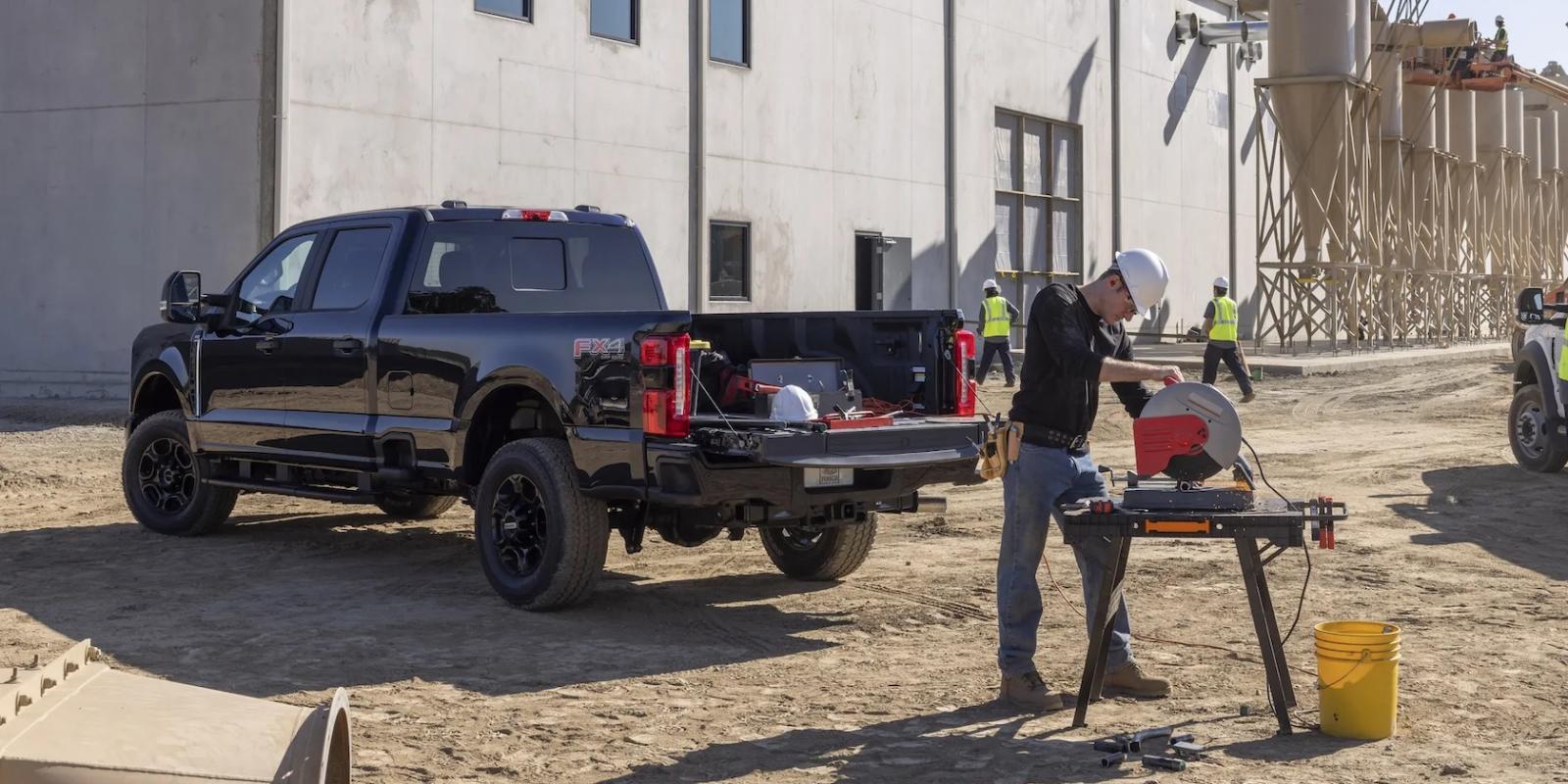
Ford announced yesterday that it’s investing $3 billion to boost output of the Super Duty, the F-150’s larger sibling that’s popular with tradespeople and commercial customers. Some $2.3 billion of that will be spent to overhaul a factory in Oakville, Ontario, that was originally destined to become an EV manufacturing hub.
A three-row electric SUV that Ford had planned to build in Oakville is getting shelved until 2027, as the automaker announced back in April.
About 1,800 Canadian jobs will be secured — 400 more than would have been needed to produce the three-row EV, Ford said. Gas-powered vehicles have more parts, and are more complex to build than EVs—that’s why you need more workers.
The pivot helped Ford solve two problems.
The automaker needs the extra truck capacity to keep up with soaring demand; the two factories where it currently builds Super Duty trucks in Ohio and Kentucky are “running flat out,” Ford said.
There aren’t enough customers for a three-row EV. Delaying the launch until 2027 will allow the market to mature and buy time for Ford to improve the product and take advantage of emerging battery technology, the company said.
While Ford’s EV unit lost $4.7 billion in 2023 (and is on track to lose even more this year), its Ford Pro commercial business earned a staggering $7.2 billion in 2023.
With an estimated $20,000 per vehicle profit on the Super Duty, it doesn’t take a genius to figure out why Ford is leaning into trucks for now. Gas-powered trucks.
Like General Motors and other rivals, Ford has been backing off EV commitments as it becomes clear that the early adopter era is over.
Like Toyota, who has been pushing their huge, extremely profitable hybrid range over EVs for several years now, Ford CEO Jim Farley is increasingly bullish on hybrids as a bridge technology. He’s seen that it’s been a successful strategy for Toyota — and Ford aims to offer hybrids across its entire lineup by 2030.
CARLIST THOUGHTS
We are not surprised to hear of Ford’s about-face with regards to EV production. It’s simple. Shelving those bullish EV plans for now is a smart move. EVs are not selling as expected, meaning Ford, like many other carmakers, cannot generate anywhere near the profits of gas-powered trucks. After all, you must give the market what it wants—and it does not want EVs. Not yet anyway.