 Peter Lyon
May 30, 2023
Peter Lyon
May 30, 2023
Electric vehicle (EV) adoption is finally gaining some steam, with nearly all carmakers promising to switch lineups to at least 50% EVs by the end of this decade. That may sound pretty straightforward, but there is one major issue plaguing this big transformation and it’s not the high EV prices, range anxiety or the fact that many are only ho-hum to drive. It has to do with the often unreliable charging networks.
Last week, we brought you the story of Ford and Tesla talking turkey about sharing chargers. This time, we bring you more depth.
Ford’s unexpected embrace of Tesla’s charging technology dramatically escalates the battle for the future of EV charging. It is being seen as a battle that rivals that of Lightning vs. USB-C or VHS vs. Betamax-style standardization war.
The problem boils down to one issue—EVs won’t go mainstream until recharging them becomes as simple as filling up a gas-powered car.
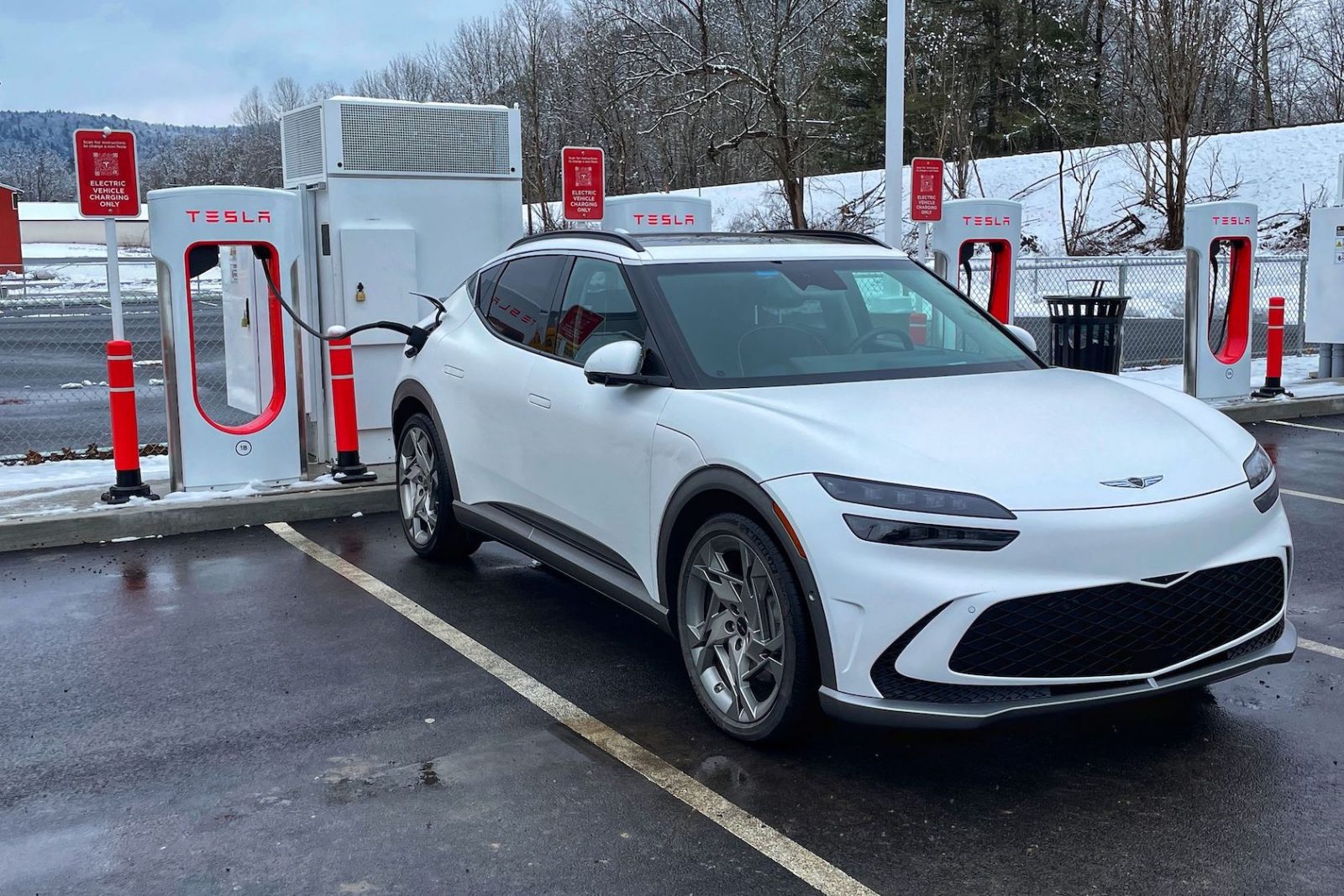
As two competing standards — Tesla’s favored NACS and CCS, used by most other EV makers — duel it out for supremacy, everyday drivers will be left confused and frustrated.
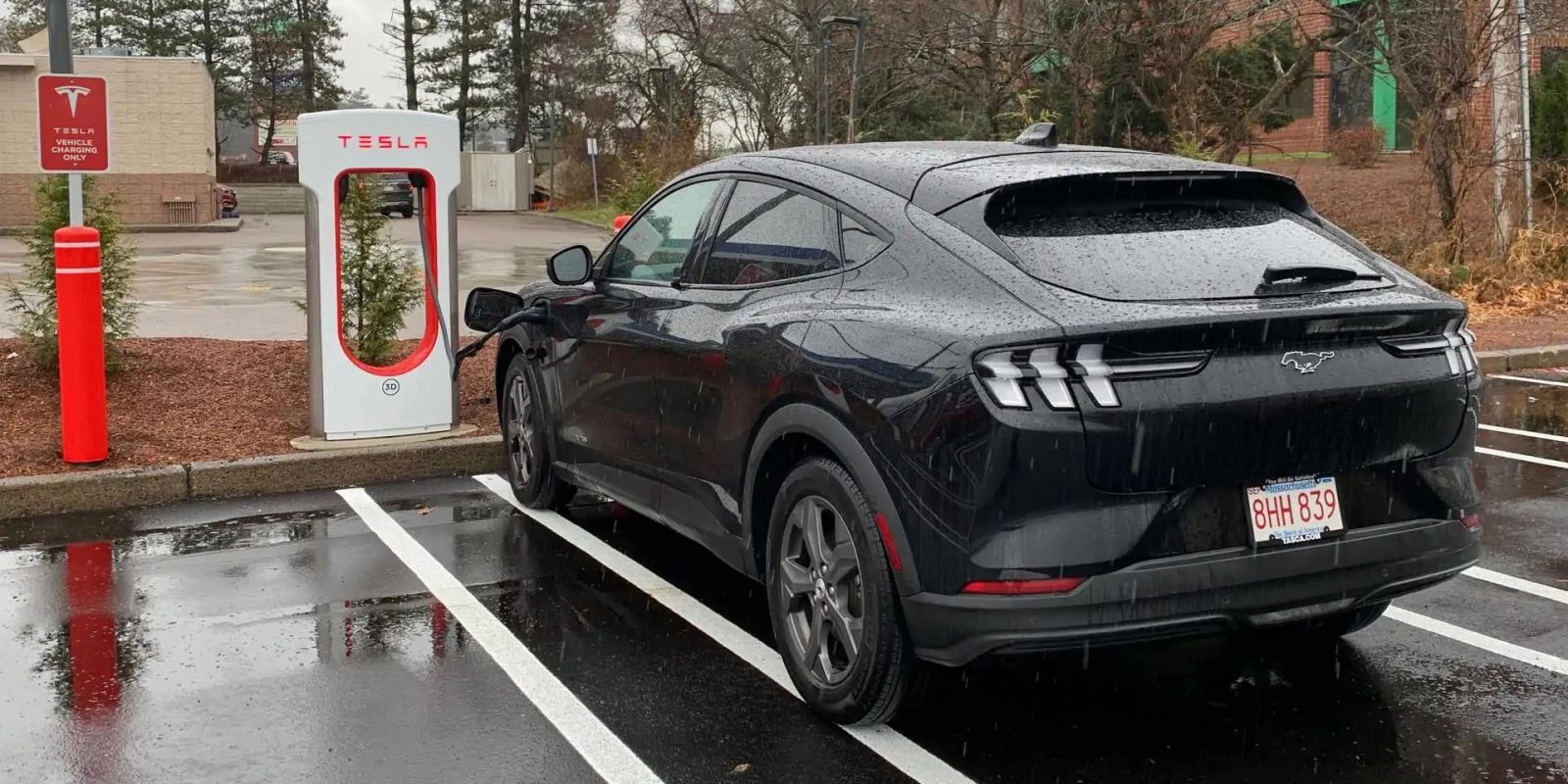
But Tesla has stepped forward to change all that. Ford and Elon Musk’s company announced last week that Ford EV owners will have access to more than 12,000 Tesla Superchargers in the U.S. and Canada starting early next year.
But the bigger news is that on future vehicles, Ford is pivoting away from the widely used CCS and will instead adopt Tesla’s charging system, which until recently had been proprietary.
Not everyone, however, is so gung ho about the move. “This completely throws a stick into the spokes of standardization,” said Chargeway CEO Matt Teske, whose company aims to simplify the charging experience.
“But from an EV owner’s experience, this decision validates that Tesla’s technical approach, design approach and ecosystem is actually better for drivers.”
Tesla’s cables and connectors are smaller, lighter, and easier to manage than the bulky CCS cables. Plus, its Supercharger network is larger and widely regarded as more reliable than competing CCS networks, such as Electrify America, EVgo, and others.
The bottom line is that everyone wants a universal charging experience, no matter whose charger they plug into. The industry currently has that with CCS, which stands for “Combined Charging System.”
The exception was Tesla, which instead rolled out a proprietary network using a different connector—creating its Supercharger network. In November 2022, Tesla opened its EV connector design to other automakers and gave it a new name — NACS, for North American Charging Standard (albeit “standard” in name only).
So why did Tesla agree to share? One reason Musk opened up his network to other brands is to qualify for a share of the $5 billion the U.S. government is handing out to build a national charging network.
Tesla agreed in February to open a section of its Supercharger network to other EV brands by the end of 2024, but progress has been slow. Whether other carmakers and charging companies shift toward Tesla’s technology is still to be seen. So far, it appears that no one else is jumping aboard.
Even Ford is being cagey about its future vehicles, saying “there will be a transition period” as it moves toward the Tesla standard. Future vehicles might have two separate charging ports, including one for Tesla, but such cars might also include an adapter that can be used on CCS chargers.
OUR THOUGHTS
Ford CEO Jim Farley summed it up in a live Twitter Spaces discussion with Tesla CEO Elon Musk last week: “We’re going into the second inning of a nine-inning game. It’s not either-or. We need physical outlets.” It’s all a reminder that we’re still in the early days of the EV movement and that industry standards need to evolve.