 Peter Lyon
July 11, 2023
Peter Lyon
July 11, 2023
The auto industry is getting serious about electric vehicles (EVs). Nearly every carmaker will launch at least one, if not multiple EVs this year, a phenomenon that is creating a big problem—not enough buyers. Or put another way—an EV glut.
More than 30 new models are arriving this year, and more than 50 new or updated models are coming in 2024, Cox Automotive estimates. The growing mismatch between EV supply and demand is a sign that even though consumers are showing more interest in EVs, they’re still not ready to bite the bullet, make the switch and purchase one.
It’s a “Field of Dreams” scenario for automakers making big bets on electrification — they’ve built the EVs, and now they’re waiting for buyers to come, says Jonathan Gregory, senior manager of economic and industry insights at Cox Automotive.
Cox experts actually highlighted the swelling EV inventories during a recent midyear industry review. EV sales, which account for about 6.5% of the U.S. auto market so far this year, are expected to surpass 1 million units for the first time in 2023, Cox forecasts.
According to Gregory, sales are just not keeping up with that increased output. The nationwide supply of EVs in stock has swelled nearly 350% this year, to more than 92,000 units. That’s a 92-day supply — roughly three months’ worth of EVs, and nearly twice the industry average.
By comparison, dealers have a relatively low 54 days’ worth of gasoline-powered vehicles in inventory as they rebound from pandemic-related supply chain interruptions. In normal times, there’s usually a 70-day supply.
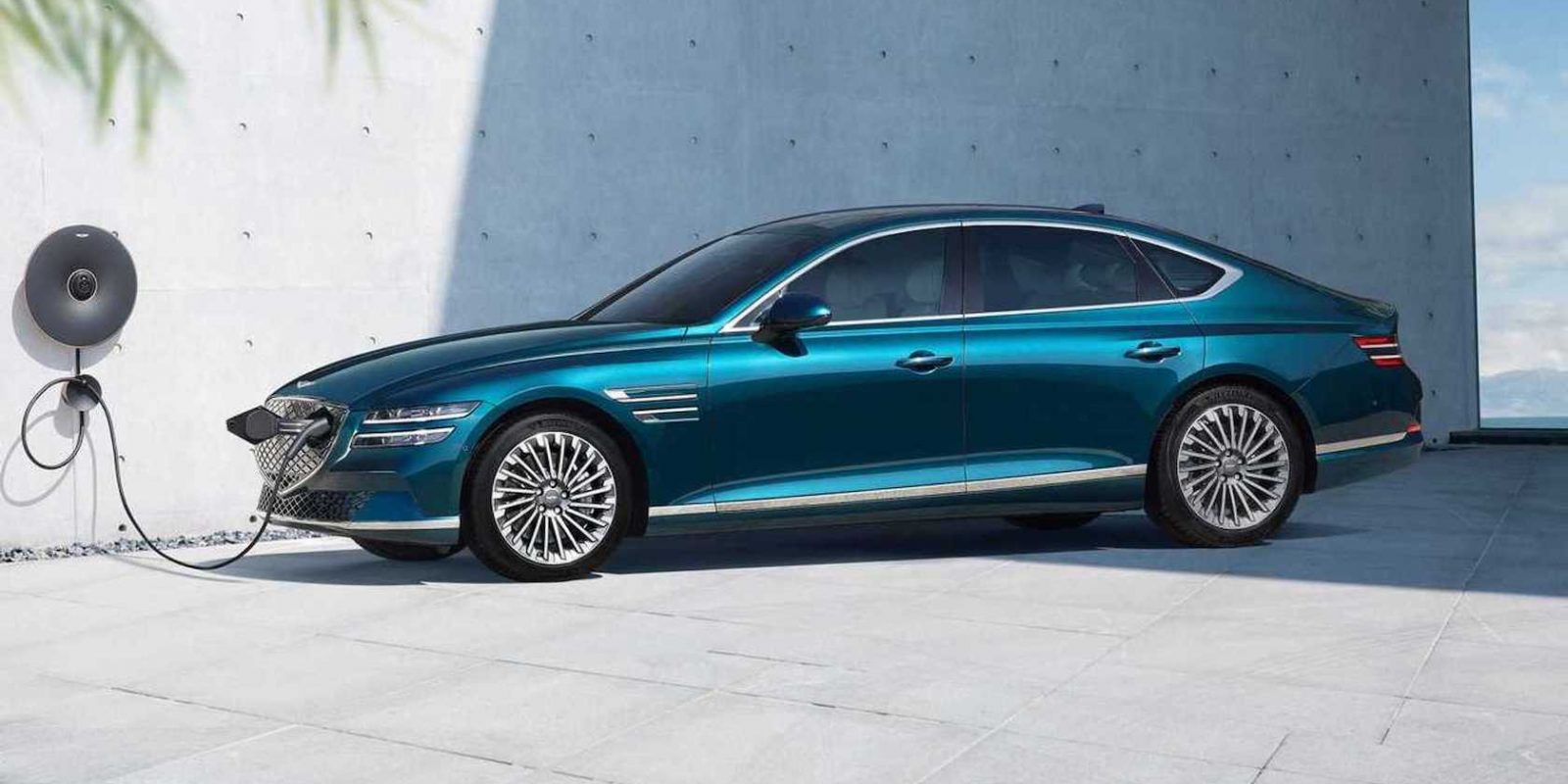
Genesis G80 inventories are piling up
Some brands have higher EV inventories than others. Genesis, the Korean luxury brand, sold only 18 of its nearly $82,000 Electrified G80 sedans (pictured above) in the 30 days leading up to June 29, and had 210 in stock nationwide — a 350-day supply, according to Cox research.
Other luxury models, like Audi’s Q4 e-tron and Q8 e-tron and the GMC Hummer EV SUV, also have sizable inventories well above 100 days. But what makes buyers even more wary of purchasing such luxury EVs is that they come with hefty price tags that make them ineligible for federal tax credits.
Imported models like the Kia EV6, Hyundai Ioniq 5, and Nissan Ariya are also stacking up — likely because they’re not eligible for tax credits either, or because their power packs are not made in North America.
And of course, it goes without saying that Tesla’s recent price-cutting strategy is taking a toll, too. The once-hot Ford Mustang Mach-E now has a 117-day supply. Ford says that’s the result of ramped-up production in anticipation of stronger third-quarter sales, which now seem unlikely to eventuate.
Toyota hybrids flying out the door while EVs remain unsold
It’s an industry fact that hybrid vehicles have much lower inventory levels, supporting Toyota’s argument that consumers want a stepping stone before they make the jump to fully electric cars.
There’s a relatively tight 44-day supply of hybrids industrywide, according to Cox. Toyotas are in particularly short supply — under 30 days each for Prius and RAV4 hybrids and plug-in hybrids, showing that a vast majority of buyers still lean towards gasoline-powered cars even with electric motors, which of course is the definition of a hybrid.
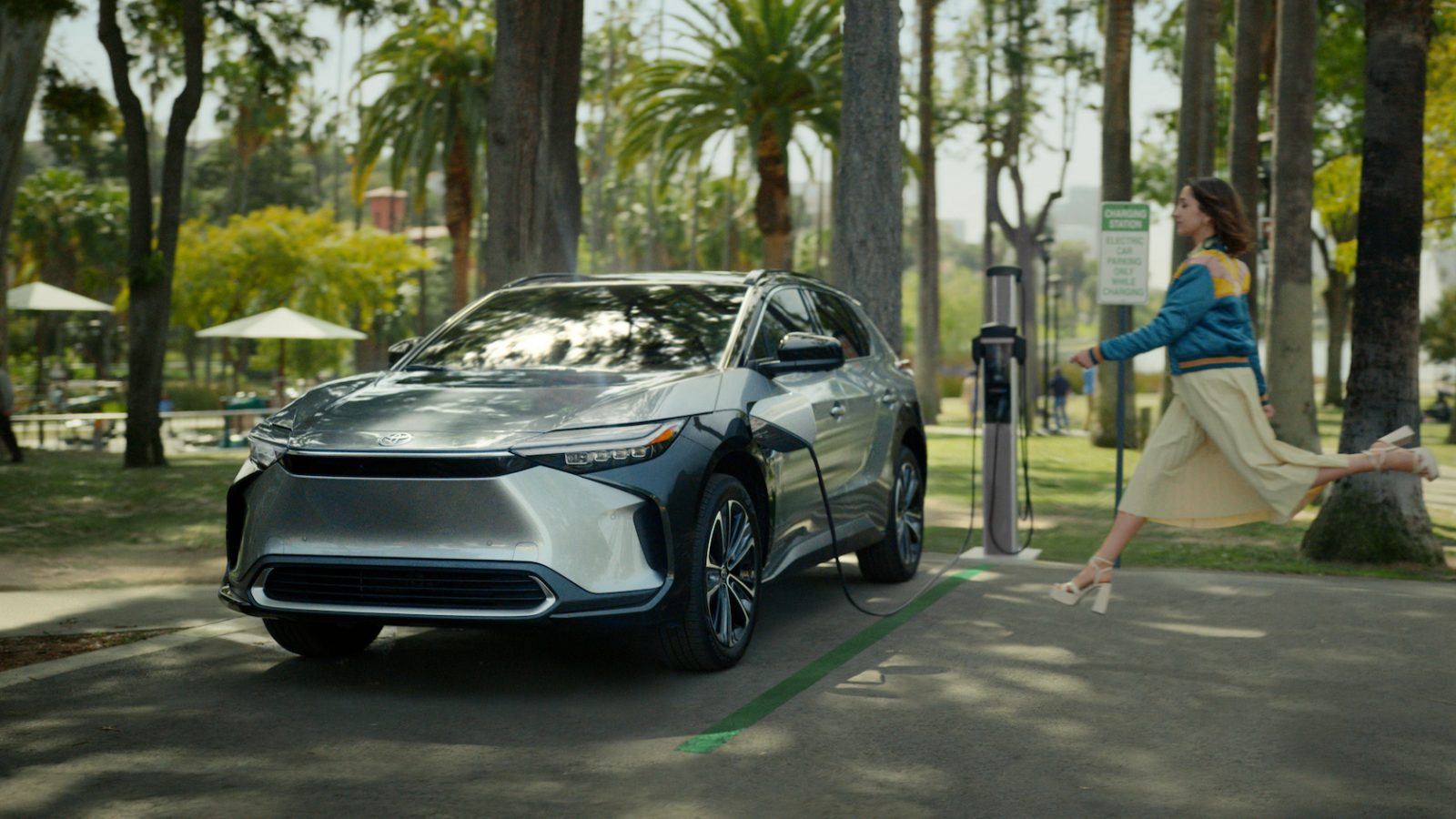
By comparison, Toyota’s only fully electric model, the Bz4X, which suffered a recall last year, has a 101-day supply. While Toyota recently announced a 3-row electric SUV and new battery technology that could double the range of future EVs, it’s sticking with a mix of hybrids, plug-in hybrids, and pure EVs for the foreseeable future.
OUR THOUGHTS
The issues are that EVs are still more expensive than their gasoline or hybrid rivals, plus many buyers still have range anxiety and are not yet satisfied with current charging infrastructure—even though Ford, GM, Rivian, and Mercedes have recently announced they will adopt Tesla’s Supercharger network from next year. Despite this, better-charging infrastructure is coming, and EV prices should reach parity with gasoline vehicles around 2025, according to Bank of America Securities auto analyst John Murphy. Until then, automakers will be left with the unenviable job of trying to change public perception towards EVs as they coax buyers into showrooms.